Last Updated on June 30, 2026 by David
Transform Your Home’s Atmosphere: The Travertine Restoration Experience in Richmond
A natural stone floor in a bustling kitchen and dining area significantly enhances a home’s charm, acting as the environment’s focal point. the effects of continual foot traffic, frequent spills, and furniture movement can gradually diminish its appeal. This was the case with a 37-square-metre honed and filled travertine floor in Richmond, South West London, where regular cleaning was no longer sufficient to restore its original beauty.
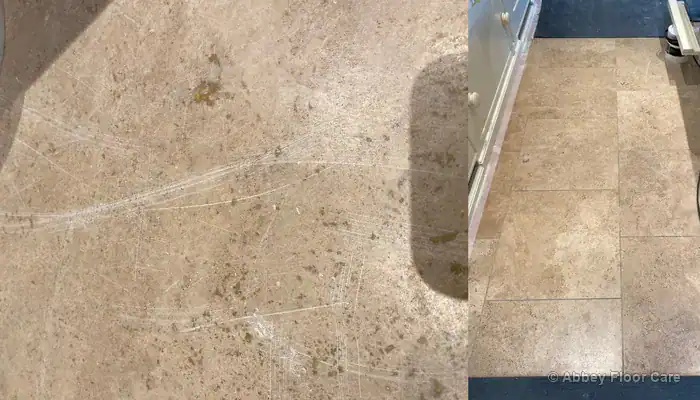
Despite the homeowner’s diligent cleaning efforts, the floor seemed dull, uneven, and darkened. The problems extended beyond mere surface dirt; the protective seal had eroded, allowing grime to penetrate the stone, while the original resin fills were degrading. This situation called for a comprehensive restoration, evolving from simple cleaning to include detailed diamond honing and structural repairs, ultimately rejuvenating the floor.
Identifying Causes of Floor Damage: What Led to the Deterioration?
Travertine, recognised for its distinct pores and mineral patterns, is a stunning stone that necessitates careful upkeep to maintain its aesthetic appeal. In this Richmond home, the balance between smooth honing and sturdy filler had been disrupted, resulting in four interconnected issues visible throughout the area:
- Degraded Surface Finish: Regular grit tracked in from the kitchen to the dining area gradually scratched the stone. The original mid-sheen factory finish faded into dull, grey paths that failed to reflect light adequately.
- Discoloured Grout: As the finish deteriorated, standard cleaning methods acted like a squeegee, pushing dirty water into the grout lines. The once-light beige joints turned dark, disrupting the visual harmony of the room.
- Mechanical Scratches: The movement of chairs and tables left faint arcs and drag marks across the surface. In lower light, these scratches marred the smooth appearance of the stone, giving it a dull look.
- Pitting and Exposed Voids: Travertine’s natural holes, generally filled during production, were compromised by years of foot traffic and harsh cleaning solutions. As the filler deteriorated, small pits formed, trapping dirt and causing the floor to appear more worn than it actually was.
Step-by-Step Restoration: Thorough Cleaning, Precision Honing, and Multi-Stage Filling
To restore the floor to its original elegance while preserving its natural features, we implemented a meticulous, multi-step restoration process. Travertine of this age requires a careful approach that balances intensive cleaning with gentle mechanical refinement, ensuring that each stage effectively addresses damage while respecting the stone’s inherent qualities.
Step 1: Eliminating Ingrained Dirt
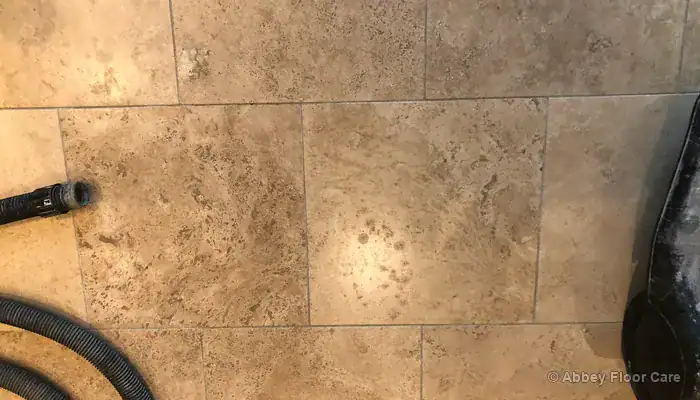
Our restoration journey began with a thorough dry vacuum to remove loose debris. Next, we applied a premium, high-alkaline cleaner to break down cooking residues, old mop remnants, and deeply embedded grime within the stone. Using a heavy-duty rotary machine equipped with agitation brushes, we worked the solution deep into the stone’s pores and grout lines. As the dirt lifted into a slurry, we promptly rinsed it away using high-vacuum hot water extraction, ensuring a clean surface free from residue.
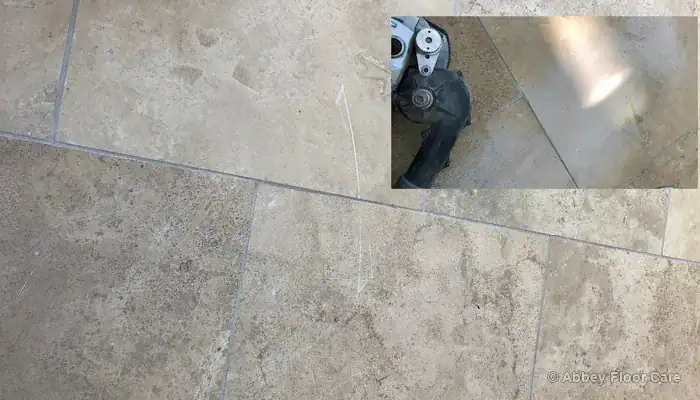
Step 2: Controlled Diamond Honing to Remove Scratches
After the cleaning phase, we concentrated on addressing the scratches on the tiles. While standard rotary honing with 100-400 grit diamonds can be effective, it may be overly aggressive, removing the top layer of the stone and exposing natural voids in filled travertine.
To reduce this risk, we used a hand-held honing machine, applying light, controlled pressure. This method enabled us to eliminate the scratches while preserving the surface integrity. After addressing the marks, we moved to the rotary machine with 800-grit diamonds to begin closing the stone’s surface, followed by 1500-grit pads to achieve a unified finish and restore a smooth, even satin appearance.
Step 3: Travertine Repair and Preparation for Sealing
During the honing stage, small hidden voids beneath the travertine surface may become visible, necessitating careful inspection of each tile. Any open pits or missing factory fills were cleaned, stabilised, and repaired using colour-matched filler designed to blend seamlessly with the beige stone. This detailed approach ensured the floor was fully restored, levelled, and ready for a robust protective seal.
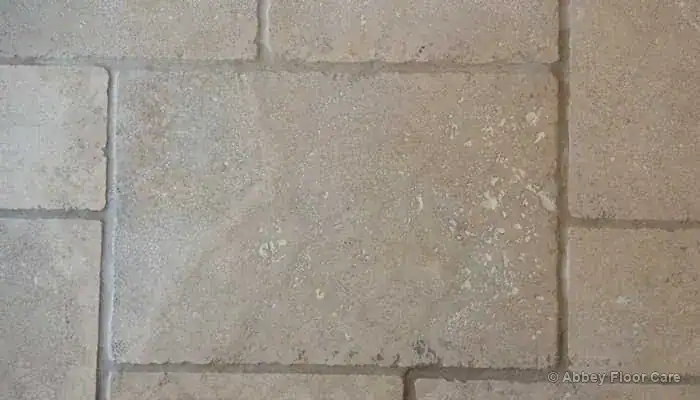
Once the repairs had cured adequately, we carefully honed them to ensure they were perfectly level with the adjacent tiles. We allowed the floor to dry completely, using a digital damp meter to confirm that no moisture remained beneath the surface before applying the protective sealer.
Visual Transformation: Achieving a Stunning Satin Finish
The restoration of the kitchen and dining area in Richmond highlights the essential difference between basic cleaning and comprehensive revitalisation of the stone surface.
| Floor Feature | Before Professional Restoration | After Professional Restoration |
|---|---|---|
| Traffic Lanes | Dull, flat, grey pathways traversing the kitchen | Clear, uniform tiles with a gentle satin sheen that beautifully reflects light |
| Grout Lines | Dark grout lines that disrupted the visual harmony of the room | Clean, light beige joints that blend seamlessly with the travertine |
| Tile Surface | Faint scratches, drag marks, and scuffs from daily use | Smooth, scratch-free tiles refined to a pristine 1500-grit clarity |
| Natural Pits | Open voids accumulating dirt and casting shadows | Fully repaired with colour-matched filler, levelled, and seamlessly integrated with the surrounding stone |
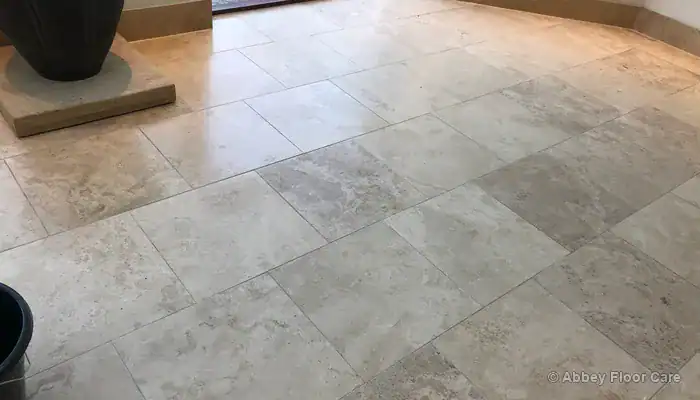
With structural concerns resolved, the floor now radiates its intended beauty. The surface has been honed to a smooth finish and properly sealed, allowing it to resist spills and daily dirt instead of absorbing them. This transformation makes regular cleaning easier, turning maintenance into a pleasurable task.
Essential Maintenance Tips to Preserve Your Restored Travertine Floor
To ensure your newly restored floor stays in excellent condition for years, it’s crucial to establish a straightforward and consistent maintenance routine. A quick daily sweep or vacuum to remove dry grit before mopping will protect the surface from unnecessary wear. When mopping, opt for a gentle, pH-neutral stone cleaner, as typical supermarket detergents can be overly harsh, dulling the stone and degrading the protective seal over time.
Avoid steam mops, as the high-pressure heat can damage specialised stone sealers and soften resin fills, allowing dirt to penetrate deeper into the stone. A little thoughtful care will keep your floor looking clean, smooth, and easy to maintain.
For a deeper understanding of managing natural stone surfaces, explore our comprehensive guides:
- Check out the complete guide for stone preservation in our travertine restoration guide.
- Learn how to address localised damage with our technical breakdown of travertine tile repair and hole filling.
- Discover the chemical reasons behind grout discolouration in our article explaining why travertine grout turns black.
- Understand how local water types and household conditions affect stone longevity in modern travertine floor care for Surrey homes.

David Allen — Abbey Floor Care
David Allen brings over 30 years of experience in restoring travertine and various natural stone floors across the UK with Abbey Floor Care. This case study from Richmond, South West London, illustrates how dull tiles, scratched areas, stained grout, and missing filler were expertly resolved in a kitchen and dining area.
The Article How We Revitalised a Worn Travertine Kitchen Floor in Richmond first appeared on https://www.abbeyfloorcare.co.uk
The Article Reviving a Worn Travertine Kitchen Floor in Richmond appeared first on https://fabritec.org
The Article Reviving a Travertine Kitchen Floor in Richmond Was Found On https://limitsofstrategy.com
References:
Https://limitsofstrategy.com/reviving-a-travertine-kitchen-floor-in-richmond/
https://cityaccommodations.com.au/travertine-kitchen-floor-revival-in-richmond/